

TIPS
How to get rid of bugs in the apartment?

Bugs are unwanted guests in every home, and their presence can be a major nuisance. However, there are effective ways to address this problem.
First, you should identify the type of bugs in your apartment, as this is crucial for determining the appropriate treatment.
There are several types of bugs that can be found in an apartment, and the most common are:
1. German cockroach (Blattella germanica) - This type of bug is very common in residential areas. They are small in size and are usually brown in color. They feed on various types of food, including waste. They are active at night and tend to hide in dark and moist places, such as kitchens, bathrooms, and storage rooms.
Locally, they are also commonly referred to as "buba-rus", although this name is linguistically incorrect, it has been widely accepted due to its common usage.
2. Ants (Formicidae) - Ants are attracted to crumbs, sugar, food leftovers, and open packages. Even a small amount of food can attract an entire colony. Ants seek water sources, so they are often present in kitchens, bathrooms, and near faucets. If they find cracks in walls or floors, they can use them to build nests. During warmer months or rainy seasons, ants look for new food sources and safer places to stay.
3. Cockroaches (Blatta orientalis) - Insects that are considered one of the most resilient pests in the world. There are more than 4,500 species of cockroaches, but only a small number pose a problem in households, including the oriental cockroach. Cockroaches are omnivorous and are attracted to almost everything - food scraps, crumbs, sugar, grease, and even cardboard or paper. These insects cannot survive long without a source of moisture, which is why they are often found in kitchens, bathrooms, and basements. Cockroaches prefer dark, warm, and moist places, such as cracks in walls, under furniture, or inside appliances.
Messy
environments with lots of trash or exposed food are ideal for their survival and reproduction. Cockroaches carry bacteria such as salmonella, E. coli, and other pathogens because they roam through trash, sewers, and contaminated surfaces. Their droppings, secretions, and body parts can cause allergic reactions and asthma, especially in children. In addition to food, they can damage paper, fabrics, leather, and other materials in the home.
4. Bed bugs (Cimex lectularius) and other insects.
Each of these types of bugs has specific habits and needs.
Therefore, when addressing the problem of bugs in the apartment, it is important to identify the type of bug to apply the appropriate treatment.
After identifying the bug, you should try to "isolate" it by removing any potential sources of food and water, as well as any hiding spots.
Try using natural repellents such as essential oils, including cinnamon, mint, lavender, eucalyptus, or garlic oil.
You can also try removing bugs using physical means, such as traps or adhesive boards.
Use chemical agents, such as insecticides. However, use them cautiously and follow the manufacturer's instructions.
Keep your home clean and prevent them from returning.
There are several types of toxic agents that can be used to remove bugs from the apartment. These are some of the most commonly used:
1. Insecticides - These are chemical products used to destroy bugs. They can be in the form of powders, sprays, or liquids. They are used to directly destroy bugs, as well as their eggs and larvae.
2. Pyrethroids - These are insecticides based on natural ingredients, such as essential oils and plant extracts. They are less harmful to the environment and are often used in households.
3. Glyphosate - This is a herbicide used to destroy plants but can also be used to eliminate bugs.
4. Contact poison - This poison is used to destroy bugs when they come into contact with it. They are often in the form of sprays or powders.
5. Systemic poison - These poisons are used to destroy bugs when they feed on the poison. They are often in the form of granules or tablets and can be purchased over the counter.
When using such toxic agents, it is important to follow the manufacturer's instructions and use them in safe quantities.
Also, attention should be paid to the dangers they pose to humans, pets, and the environment. If you are inexperienced in such work, we recommend hiring a professional pest control expert.
Safety valve on the water heater

Safety valve for the water heater is a key element of any water heating system, whose main function is to protect the water heater from excessive pressure. This device ensures that the pressure inside the water heater does not exceed safe limits, thus preventing potential malfunctions and ensuring long-lasting and safe operation.
How does the safety valve work?
During the heating of water in the heater, the water volume increases, leading to an increase in system pressure. The safety valve is designed to respond to excessive pressure by opening and automatically releasing excess water or steam from the system. In this way, it ensures pressure stability and protects the water heater from damage and potential explosion.
Why is it important?
1. Protection from explosion - In the case of excessive pressure, the safety valve prevents dangerous situations such as a water heater explosion.
2. Device longevity - Pressure control contributes to the longer lifespan of the water heater.
3. System protection - Prevents leaks and damage to other components of the installation.
When to replace the safety valve?
Regular maintenance of the safety valve is crucial for its proper functioning. It is recommended to periodically check the valve for limescale and other impurities that may hinder its operation. If the valve is leaking, it should be replaced immediately.
The safety valve should be replaced if:
• Water continuously leaks even under normal pressure.
• It does not release excess water when the pressure is excessive.
• It shows signs of damage or corrosion.
How to replace the safety valve of a water heater?
Yes, in theory, you should be able to replace the safety valve on the water heater yourself. However, it is important to note that this is a technically demanding procedure, and there is a risk of damaging the water heater or pipes if not handled carefully.
If you are inexperienced in such work, it is recommended to hire a professional for repairs or routine maintenance.
1. Turn off the water heater
• Before starting, be sure to unplug the water heater from the electrical network. Remove the plug from the socket, turn off the switch, or disable the fuse. This is important for your safety.
2. Shut off the water supply
• Close the main valve supplying water to the water heater. This will prevent additional water from entering the system.
3. Drain the water from the heater
• Open the hot water tap to reduce pressure.
• Use the drain valve on the water heater if available, or slowly unscrew the safety valve to release any remaining water from the heater. Prepare a container to collect the water.
4. Remove the old safety valve
• Use an appropriate wrench (usually sizes 22 or 24) or an adjustable wrench to unscrew the old valve. Pay attention to any residual limescale or dirt.
5. Install the new safety valve
• Apply a layer of Teflon tape or thread sealant to the pipe threads to ensure a good seal.
• Screw the new safety valve in by hand and then tighten it further with a wrench, but not too much to avoid damaging the threads.
6. Check for leaks
• Turn the water supply back on and carefully observe for any leaks around the new valve. If there is leakage, tighten the valve further or check the Teflon tape or sealant.
7. Turn on the water heater
• Once you are sure there are no leaks, plug the water heater back into the electrical network and check if it operates normally.
When to call a professional?
If you are unsure of your skills or notice any problem (such as unusual leakage or difficulty removing the valve), it is best to hire a qualified technician to avoid damage or risks.
Replacing a worn-out heater in a storage water heater

In everyday life, water heaters are crucial devices that provide us with the necessary hot water for all household needs. However, like all appliances, over time, water heater elements wear out and become less efficient. When you notice that your water is getting colder or it takes longer to heat up, it's often a sign that it's time to replace the worn-out heater.
The process of replacing a worn-out heater may seem intimidating, but with the right tools and instructions, you can do it yourself or with the help of a professional.
Here are a few steps on how to replace a heater in a storage water heater:
1. Safety first:
Before starting any work, make sure the water heater is turned off and there is no electricity (unplug it from the outlet, turn off the switch, or trip the water heater's circuit breaker). Also, be sure to turn off the water supply by turning the heater valve.
2. Drain the water heater:
Drain the water heater by releasing it at the cold water inlet by removing the brass hose and safety valve. Open the hot water tap on a faucet and wait for all the water to drain out. As air enters the system, it will release the vacuum holding the water, and it will flow out.
If the water heater is not above the bathtub, use a hose (you can use a drain hose from a washing machine) or a container to redirect it. Once the water heater is drained, you will have unobstructed access to the heater.
3. Remove the worn-out heater:
Carefully remove the old heater using the appropriate tools. This may require some effort, as the heater may become stuck over time.
First, after removing the protective cover, remove the clamps and gain access to the heater. Use the appropriate wrench or screwdriver to loosen the heater connections. These connections typically look like screws or nuts on the heater.
Once loosened, carefully pull out the worn-out heater from the opening in the water heater. Be careful not to damage the interior of the water heater while doing this.
Carefully clean the inside of the water heater from any remaining scale.
4. Replace the heater:
* Before installing the new heater, check if it matches the dimensions and specifications of the old heater. Make sure that the new heater is of the same power and compatible with your water heater.
* Place the new heater in the same position from which you removed the old one. Pay attention to aligning the connections on the new heater with the connections in the water heater.
Tighten the connections on the new heater using appropriate tools. Do not over-tighten them, just enough to securely place them. Excessive tightening can damage the boiler or the heater. Make sure the sealing rubber on the heater is properly positioned.
Carefully thread the cables back through the openings in the boiler and connect them to the terminals on the heater. Pay attention to polarity, ensuring you connect the wires correctly. Typically, the red or blue wire is connected to the positive terminal, while the black or brown wire is connected to the negative terminal.
Again, use the appropriate wrench or screwdriver to securely tighten the connections on the heater.
Replace the protective cover on the boiler to close the interior.
5. Filling the boiler: Replace and tighten the safety valve and necessary hoses. Reopen the water supply and fill the boiler. Follow the boiler instructions to ensure everything is correctly adjusted.
6. Checking and testing: Wait for some time for the boiler to reach the desired temperature again. Check if the water is now as hot as before and if there are no leaks.
By replacing the worn-out heater in the storage water heater, you can extend the device's lifespan and improve its efficiency. If you're unsure of your skills or feel insecure, it's always best to consult a professional. Maintaining and caring for your boiler will often save you money in the long run and ensure you always have hot water when you need it.
How does Feng Shui influence the energy of success?

Reconstruction in an Energy Way
Everything you do affects the flow of energy both in the space where you live, work, or create, and within yourself—your feelings, thoughts, and success. It's a synergistic process that is complementary, developmental, and diverse.
Feng Shui is an ancient science of arranging and flowing energy in space. The knowledge originates from China over 4,000 years ago, and then, as well as now in modern times, this skill of space creation primarily influences:
personal energy,
energy of success and wealth,
health, interpersonal relationships, overall development, and progress.
Whether you attract money, knowledge, reputation in business, or clients largely depends on the proper flow of energy within the space, arranged by proper layout, selection of specific materials, colors, shapes, forms, all in agreement with the client.
The essence of Feng Shui arrangement is solely the client's need. Everyone carries their personal expression, origin, energy, and therefore, Feng Shui, based on all analyses, harmonizes the client's needs, all with the aim of activating prosperity, new possibilities, and personal success.
We are here to help you arrange your space in a way that tells a story of success. Every room is important, and each represents a segment that forms the whole in your life. The path of space arrangement is creation, and we call it reconstruction in an energy way.
"Let your reconstruction be an energetic structure for a more beautiful, happier, and higher quality life." ~ Danijela Marković
How to replace an LED strip?

LED strips are a popular way of illuminating various spaces and objects. However, like all other light sources, they have their lifespan and need to be replaced occasionally.
We have outlined some steps to make it easier for you and enable you to replace the LED strip yourself.
1. Before you start working, make sure to turn off the power to the LED strip.
2. Remove the diffuser (cover) from the aluminum profile where the LED strip is located to access it.
3. Remove the old LED strip by disconnecting the connector and pulling it out of the profile. If the strip is only glued to the surface, feel free to peel it off. The back of each LED strip is usually self-adhesive.
4. Measure the length of the new LED strip and check if it fits into the profile. If the strip is longer, cut off the excess with scissors at precisely marked locations. If the length of the cascade or niche is more than 5 meters (position where you stick the new LED strip), and you don't have enough length of LED strip, you must continue it with another LED strip. Connecting two LED strips is done with connectors (connectors). They allow the strips to be connected to each other, usually made of plastic or metal and contain small contacts that match the contacts on the LED strips. If there are no connectors, you can use soldering technique to continue LED strips. This procedure requires owning a soldering iron and a little experience in soldering, but you can always watch some YouTube tutorials on the subject. There are also special cables that can be used for connection. They are made of copper and have small contacts at one end that can be connected to the contacts on the strips, but they are used less frequently.
5. Insert the LED strip into the profile.
6. Connect the strip to the transformer in the same way as the old strip was connected. Pay attention to which side the 220v power is connected to and which side the LED strip is connected to. Return the transformer to its position.
7. Press the cover (diffuser) onto the LED strip to close the interior.
8. Turn on the power and check if the new LED strip is working properly.
Your new LED strip should now be working properly.
If any problems arise, check if you have properly connected the connectors and if the new LED strip is functioning correctly.
How does Feng Shui influence the rooms in a property?

With each reconstruction, you affect the Law of Attraction, because everything is "in your field of vision", and what you see, you attract into your life. And every reconstruction should create balance within the space for a more beautiful, easier, and successful life.
In this text, we write to you about the influence of active and passive areas.
Active areas in a property include: entrance area, living room, dining room, bedroom, children's room, office, workspace. Passive areas include: kitchen, laundry room, bathroom, garage, storage room, basement.
Entrance doors are the entry of energy, and through that portal comes the freshness that moves through the rooms. Depending on how they are positioned in the property, by choosing color, shape, material, you can influence personal success of the family, individual, or career.
Kitchen feeds you, so it's a place of creation, health, and money. In complete balance, it affects all three aspects of life. In relation to the layout and positions, we choose materials, colors, shapes, and functionality all with the aim of progress.
Dining room and living room prefer softer materials, but also calmer colors, except in some exceptions. If you want to be recognized and have good communication everywhere and always, then this part definitely needs attention, because Feng Shui knowledge can change your life positively.
Children's room is like a playground, full of creative energy which, with proper activation, will influence the proper development of your little ones.
Bedroom is associated with interpersonal relationships and love. And that's true, and we'll tell you that it equally affects your vitality and health.
Each person has their own unique energy and in collaboration with that, we together create what is best for your intimacy and vitality.
Workspaces and offices are very strong places that will enable you to expand your business, bring in new clients, and profit.
We advise that everything in your office be tailored to your needs based on unique Feng Shui analyses. As the organizational energy flow will look, so will your business results.
Bathrooms, storage rooms, hallways, laundry rooms, and basements are areas we arrange to balance active energy with passive. If any area or all areas are not functioning, they are activated by proper arrangement.
The first step is a conversation with the client and a sense of their needs, aligning desires.
The second step is a detailed plan with suggestions and changes, including selecting everything necessary.
The third step is partial or complete renovation, and the fourth step is the final segment of applying Feng Shui and activation with dowsing and setting up protective measures.
"Let your reconstruction be an energetic structure for a more beautiful, happier, and higher quality life." ~ Danijela Marković
How to replace a door lock cylinder?

Lock and Cylinder are important parts of a door, as they ensure security and privacy. However, like any mechanism, both the lock and cylinder can occasionally become damaged or worn out and need to be replaced. The reason for replacement could also be due to the loss or breakage of the key, or a change in tenants in the apartment, among other things.
It's good to know that instead of completely replacing the lock, it's possible to replace just the cylinder or the larva (the coded part) of the lock. Here's a step-by-step guide on how to replace a door lock cylinder:
1. You need to remove the old lock cylinder from the door. This can usually be done using a screwdriver. Often, there's no need to remove the decorative cover of the lock and the handle itself, but sometimes this operation can make it easier to remove the cylinder.
After removing the decorative cover and unscrewing the side screw that holds the lock insert, simply pull it out of its housing using the key.
2. After removing the old cylinder, you need to check the dimensions of the new one to ensure they fit your door. You'll also use the key to install the new lock insert.
When the key is in the lock in a vertical position, the tongue protrudes slightly from the lock insert. Therefore, the cylinder cannot be inserted or removed without the key.
3. Insert the new cylinder, making sure it fits into the appropriate place. Turning the key retracts the tongue inward and allows the cylinder to be placed in its housing.
4. Replace the screws and other parts necessary for securely attaching the cylinder and lock to the door.
5. Check if the cylinder and lock operate properly and if they open and close easily. Check the locking function by turning the key.
6. If necessary, adjust the position of the cylinder in the lock on the door to ensure the door opens and closes easily. If everything is fine, tighten the screw that secures the lock insert to the lock with a screwdriver.
7. Replace the decorative cover of the lock and handle if you removed it to make it easier to remove the cylinder.
Similarly, if you're inexperienced in such work or unfamiliar with the structure and operation of locks and cylinders,
we recommend seeking professional help to avoid damaging the door or compromising the security of your apartment, house, or business premises.
What is the best color for walls?

There are many different colors and tones that can be used for painting walls. The best color depends on personal taste and preferences, as well as the ambiance you want to achieve in the space. However, some of the most popular colors for painting walls and the effect you want to achieve with them are as follows: White color is often used for painting walls because it gives a sense of spaciousness and cleanliness. White can be combined with different shades and colors of furniture and decorative elements to achieve the desired ambiance. Blue color is often used for painting bedrooms because it is considered a cool and soothing color. Blue can be combined with light shades to create a relaxing ambiance or with darker shades to achieve a more dramatic effect. Gray color is often used for painting walls because it gives a sense of modernity and sophistication. Gray can be combined with different shades and colors to achieve the desired ambiance. Yellow color is often used for painting walls because it gives a sense of warmth and light. Yellow can be combined with light shades to create a relaxing ambiance or with darker shades to achieve a more dramatic effect. Green color is often used for painting walls because it is considered a healthy and relaxing color. Green can be combined with different shades and colors to achieve the desired ambiance. These are just some of the colors that can be used for painting walls. The best color for you depends on your personal preferences and the ambiance you want to achieve in the space.
How to renovate an apartment more affordably?

Apartment Renovation is an important process that can improve the comfort, value, and appearance of the apartment. However, renovating on a limited budget can be challenging. To renovate the apartment more affordably, you need to set a renovation budget and find inexpensive materials and labor. But of course, you must consider the balance between cost and quality. Additionally, you can consider doing the work yourself or finding alternative solutions.
The first step in renovating an apartment is setting a renovation budget. You need to determine the total amount of money available for renovation and allocate funds prioritizing the most essential renovations. This way, you'll ensure that money is not spent on things that are unnecessary or can be postponed for later.
The next step is to find inexpensive materials and labor. You need to explore the market for materials such as paints, flooring, and appliances and choose those with the best prices. You can also consider using second-hand or discounted materials. Additionally, look for contractors or craftsmen who offer competitive prices or are willing to negotiate. They often have suppliers through which you can obtain quality and pre-tested materials at a lower cost.
Another option is to do the renovation yourself. Depending on your skills and experience, you may be able to perform some renovations yourself and save money on labor. You need to research and gather information through online tutorials or seek advice from experts. You can also consider hiring the help of friends or family members to share the work and reduce costs. However, sometimes it's cheaper to hire professionals, especially if you lack sufficient experience.
Finally, you can consider alternative solutions. Instead of buying new things for the apartment, you can look for used or second-hand items that are still in good condition. This can save you a lot of money.
How to adjust PVC windows?

PVC windows are a popular choice for many homeowners due to their durability, energy efficiency, and low maintenance requirements. They do not require frequent or extensive repairs and are easy to maintain compared to other types of windows, as you can generally do everything yourself. However, to ensure they function properly and last a long time, it's important to adjust them according to the season and regularly lubricate them. In this article, we will show you how to do this in a few simple steps. General rule: All moving parts of the window should be lubricated at least once a year. Use a special lubricating oil or any other machine oil. Simply apply a few drops to all moving mechanisms, such as locks, hinges, and handles, and you're done with the annual window lubrication. Determine the operating mode: The first thing you need to do is determine whether your PVC windows are in summer or winter mode. To do this, place a sheet of paper between the sash and the frame of the window. If the sheet can be easily removed without damage, then the mode is summer. If the sheet begins to tear, the windows are set to winter mode. Locate the closing mechanism: To adjust the windows, you need to open the sash and locate the closing mechanism. This is usually a small device consisting of several pins or levers that hold the sash in place. Adjust the winter mode: To adjust the winter mode, you need to move the pins away from the central position. Most PVC windows have round or cylindrical pins with indentations for a key. These indentations correspond to hexagonal keys - hex keys, which you can easily purchase if you haven't already received them with the windows. To adjust the winter mode, use the key to turn the pins clockwise until they are fully extended. Adjust the summer mode: To adjust the summer mode, simply turn the pins in the opposite direction of the clock until they return to the central position.
This will allow for a slight exchange of air between the interior and exterior of the window, helping to keep the room fresh and comfortable.
Test the adjustment: After adjusting the desired mode, test the adjustment by trying to open and close the window. If it moves smoothly and without resistance, the adjustment is successful. If not, repeat the steps until the window starts to function properly.
In summary, adjusting and lubricating PVC windows is a simple task that any homeowner can do. By following these steps, you can ensure that your windows operate correctly and provide optimal insulation and air exchange. Don't forget to lubricate the moving parts at least once a year to keep them running smoothly and extend their lifespan.
How to fix a leaking toilet cistern?

The occurrence of water leakage is a common problem with toilet cisterns. Although it may seem harmless, this problem should be taken seriously, as even a small leak can lead to expenses in the household budget. Namely, if the cistern is faulty, it can leak from 50 to 100 liters of water during the day without you being aware of it.
Toilet cistern repair is not difficult, but it is important to identify the cause of the leakage.
The most common cause is wear or damage to the seal, which causes the rubber gasket not to seal properly. In that case, it is necessary to replace the rubber gasket.
First, it is necessary to shut off the water supply and empty the cistern. Then remove the water inlet pipe and the cap, and unscrew the nut. Remove the mechanism from the cistern and remove dirt and limescale. Remove the old rubber seal and install a new one of appropriate dimensions. Assemble the mechanism and return it to the cistern. Fill with water and check that the water no longer leaks.
If, after removing the cap, you find that the flapper is damaged, it is necessary to replace the rubber and install a new flapper.
If the float is defective, it can also cause water overflow through the overflow pipe. In that case, it is necessary to adjust or replace the float with a new one.
First, shut off the main valve on the wall, then unscrew the hose (brass) from the cistern that connects it to the valve. Then unscrew the nut holding it and release the float. Replace it with a new float, screw it on, adjust the water level, reattach the hose, and turn on the water. It is recommended to clean the cistern from dirt and limescale with each intervention.
If you are not sure how to repair the toilet cistern or if you have any problems, we recommend contacting a professional for assistance.
How to clean the indoor unit of an air conditioner?

Cleaning the indoor unit of the air conditioner is an important task for
maintaining the quality and longevity of the device. There are
several steps you can take to clean
the indoor unit of the air conditioner:
Turn off the air conditioner and disconnect the power. Before
you start working with the air conditioner, it is necessary
to turn it off and disconnect the power to prevent
the risk of electric shock.
Clean the filter. The air conditioner filter is the most common cause of clogging
in the indoor unit, so it's important to clean it regularly.
To do this, remove the filter and clean it with water and
detergent. If the filter is too dirty, you may
need to replace it with a new one.
Clean the indoor unit. Once you have removed the filter,
wipe away dust and dirt from the indoor unit
using a semi-damp cloth. Also, wipe the valves on the indoor
unit of the air conditioner to prevent clogging.
Clean the outdoor unit. The outdoor unit of the air conditioner
also needs regular maintenance. Clean it from dirt
and leaves using a damp cloth or brush.
Reassemble the unit. Once you have finished cleaning, reassemble
the unit in reverse order and turn it back on.
Note: It is recommended to clean the indoor unit of the air conditioner
at least once a year, and to clean the outdoor unit
regularly to prevent clogging and maintain
the quality of the device's operation.
If you are unsure how to clean your air conditioner, or if you encounter any issues during cleaning, we recommend contacting a professional for assistance.
How to mount a TV on the wall?

Mounting a TV on the wall can be a practical solution for those who want to free up space on their TV stand or shelf but don't want to compromise on viewing quality. Mounting a TV on the wall requires certain knowledge and tools, so it's important to adhere to safety rules to avoid any unwanted accidents.
The first step in the process of mounting a TV on the wall is to calculate the exact location where the TV will be placed. Ensure that the TV will be at a reasonable height for viewing and won't collide with any other objects in the room. The recommended viewing height for a TV is at 110cm from the floor.
Also, check if the wall where the TV will be mounted is sturdy enough to support the weight of the device. You need to choose the type of TV mount, whether it's fixed, tilting, or articulating.
The second step is to prepare the necessary tools and materials. You should have appropriate wall anchors and screws, as well as the right drill bits and drill. Additionally, you'll need the appropriate power cable and HDMI cable if you want to connect the TV to other devices.
The third step is to drill the wall anchors. Measure and mark the exact drilling points on the wall, drill the holes, and secure the desired mount using screws on the wall. Make sure the screws are securely fastened to support the weight of the TV.
The fourth step is to mount the TV on the bracket and connect it to power and other devices. It's advisable to have someone assist you during the installation. Then, connect the HDMI cable to the TV and other devices you want to connect, such as a set-top box or gaming console. Also, connect the power cable to the TV and the power outlet.
The optimal viewing distance for a TV is calculated by multiplying the TV's diagonal size by 1.6. For example, if the TV's diagonal size is 50 inches (127 cm), it shouldn't be viewed from a distance of less than 2 meters. Again, the mounting height and viewing distance of the TV are optional and primarily depend on your preference. Enjoy.
How to unclog a sink?

Clogged sink can be a significant issue in any household, but with the right tools and techniques, it can be relatively easy to unclog. Here are some tips you can take and try before calling a plumber. First thing you can do is remove any visible debris from the sink, such as food scraps or hair. This can usually be done by hand, with tweezers, or other tools. Then unscrew the grate on the sink, typically held in place by one screw attached to the trap pipe. Clean the physical contents and debris from it, as well as the contents underneath its position on top of the trap pipe. The next step, if the blockage persists, would be to remove your trap from the sink, taking care to catch the contents of the trap in a prepared container. Clean it out, shake it, and then rinse it. After you've washed it, remount it. If the blockage is still there, you can try pouring a mildly diluted dishwashing liquid, about half a liter, wait fifteen minutes, and pour over it a pot of boiling water. This should help dissolve accumulated and deposited grease in the pipes. Another method is to pour dissolved baking soda into the drain and then immediately pour a cup of vinegar. Wait for some time for a chemical reaction to occur and then run water. This should help in most cases. If none of this has helped, you can purchase a chemical drain cleaner from retail stores. Follow the instructions on the package carefully, as these substances can be hazardous if not used properly. Be careful to use them correctly to avoid damaging the pipes. You can also try using a plumbing snake. Such snakes can reach far into the interior of the pipes and help break up and remove blockages. Try using a plunger as well. If you're not successful with any of these methods, it may be time to call a professional plumber. They have the expertise and equipment to deal with even the most stubborn blockages. Following these tips should help you successfully clear the clogged sink and restore normal water flow.
How to bleed radiators?

In radiators, air accumulates over the year, occupying space in the hot water. As a result, the upper parts of the radiators or some fins remain cold, and the heating is consequently weaker.
In that case, you need to bleed the radiator, i.e., release air from it, which you can do yourself by following these steps.
1. Locate the air release valve on the radiator. The air release valve is a small valve usually located near the top of the radiator. It's preferable that if there's a central heating system, it's turned off.
2. Wrap a cloth directly around the valve or place it under the radiator to catch any leaking water. You can also use a container, but using a cloth reduces the risk of splashing walls. Be cautious, as the water coming out can be hot.
3. Place a radiator key into the groove on the valve and slowly turn the valve counterclockwise. You can also use a screwdriver. Usually, just half a turn or less is sufficient, and you'll hear the sound of air escaping through the valve. If water starts to leak from the valve, it means the radiator is fully purged of trapped air. You can then close the valve. If you've turned off the central heating system, restart it.
4. Check all other radiators in the house and repeat the air release process if necessary. It may be necessary to repeat the air release procedure several times.
5. Check if the radiators heat up normally. If they don't heat up properly, you may need to call a specialist in central heating to check the system.
How to replace a ceiling light fixture?

Replacing a ceiling light fixture, whether it's a traditional ceiling light or a newer LED one, follows the same procedure.
We've outlined a few steps for you to easily accomplish this task.
Preparation: Before you start replacing the ceiling light fixture, you'll need to gather the necessary tools and materials. You'll need a screwdriver, pliers, a new ceiling light fixture, wire, and a connector (clamp), although in most cases, these are pre-mounted on the new fixture. You may also need a drill if the holes for the old fixture don't align with those of the new one.
Turning off the power: Before you begin, it's important to turn off the power in the room where you plan to replace the ceiling light fixture. You can do this by switching off the main circuit breaker for the electricity in your apartment or house. Alternatively, you can pinpoint and switch off only the fuse connected to the light fixture you want to replace. Before starting work, double-check with pliers to ensure the fixture is not live. It's recommended to wear protective gloves as well.
Removing the old fixture: Once you're sure the power is off, you can start removing the old fixture. Do this by unscrewing the screws that hold the fixture in place on the ceiling and then remove it. First, unscrew and disconnect the supply wires from the old fixture's clamp.
Installing the new fixture: After removing the old fixture, you can start installing the new one. First, check if the mounting holes on the ceiling align. If not, mark and drill new holes and install anchors. Then, connect the supply wires to the new fixture using a screwdriver, using the clamp factory-mounted on the new fixture if available. If not, attach it yourself to the wires by screwing it with a screwdriver. Then, place the new fixture in the position of the old one and tighten the screws to secure it to the ceiling.
Turning the power back on: After finishing installing the new fixture, you can turn the power back on and check if everything is properly connected and if the fixture works as it should.
If you're unsure of your abilities or don't feel confident with electrical installations, we recommend calling a professional or an electrician. Our team is always available to assist you.
How to apply silicone to joints?

Here are some tips on how to apply silicone to joints more easily.
Preparation: Before you start, prepare the surface where the silicone will be applied. This involves cleaning the surface from dust, grease, and other impurities. This can be done using detergent and water, or possibly some solvents. After preparing the surface, create a dry base for the silicone. This can be done by wiping the surface with a dry towel or cloth, and you can also use a hairdryer.
Prepare the silicone: Cut the tip of the silicone tube with a scalpel, being careful not to damage the plastic thread. Then screw the tip of the silicone tube (you get it with the silicone) onto that same thread and cut it at an angle to the thickness of the layer you want to achieve when sealing. For thinner joints, you will make a cut closer to the top, and for thicker ones, logically, closer to the bottom. Place the prepared tube in a silicone gun that will help you squeeze and apply it. If you don't have a gun, you can also use the handle of a hammer, which can also help you squeeze the silicone out of the tube. It's a bit harder, but not impossible.
Apply the silicone: Start applying the silicone from the ends of the joints, moving towards the center. Apply silicone along the entire length of the joint. Fill in all gaps and evenly distribute it. Use the thickness of silicone as needed. After applying the silicone, run your fingertip over the joint line to press the silicone in and remove excess. It is recommended to dip your finger in a viscous liquid. You can use a slightly diluted dishwashing liquid to enable proper pressing of the silicone and prevent it from sticking to your finger. Use a piece of stiff cardboard to remove excess silicone from your finger.
Let it dry: Let the silicone dry according to the manufacturer's instructions. This can take from a few minutes to several hours, depending on the thickness of the layer and the humidity of the environment. It may happen that if the cracks are larger, the silicone will sink into them after drying. In that case, repeat the above steps.
Wipe off excess silicone: After the silicone has dried, wipe off the excess with a dishcloth or damp cloth.
If you're not confident in your ability to apply silicone, let a professional do it for you. This process is general and may vary depending on the type of project and type of silicone you are using, so it is recommended to read the instructions on the product you are using before starting silicone application.
How to replace a built-in LED bulb?

LED bulbs have become increasingly popular due to their high energy efficiency and long lifespan. However, like any other bulbs, they can malfunction and need to be replaced. In this guide, we'll show you step-by-step how to replace a built-in LED bulb.
First step is to turn on the light to locate the bulb you want to replace. Then, turn off the power either at the switch or the circuit breaker. Use a voltage tester to ensure the power is off. This is crucial for your safety to prevent electric shock.
Second step is to take a flathead screwdriver and gently pry off the socket holding the bulb in the ceiling, wall, or fixture. It's usually secured with two side springs positioned at a 180-degree angle, holding it in place. Press the springs with your thumb and forefinger while removing it to make it easier. In some cases, instead of a socket, the bulb may have a cap that unscrews.
Third step is to remove the old LED bulb. Depending on the type of socket, there are different types of bulb connections. If it's a G4 or G9 socket, there are two thin contact pins for connecting to the corresponding socket. Simply pull them out when replacing the bulb and insert the contacts of the new bulb into the socket. If it's a GU10 socket (twist & lock socket), which has two contact pins with thicker ends, a different removal system applies. You'll need to twist and pull it out to release it.
Fourth step is to insert the new LED bulb. It fits easily by either pushing or twisting it clockwise and placing it in position. Pay attention to the position of the spring-wire that holds the bulb in place in the socket. It often falls out when removing, so make sure to put it back in place.
Fifth step is to reattach the socket with the bulb in place, keeping the springs compressed to facilitate insertion into the cavity.
The final step is to turn on the power and check if the bulb is working. If it is, you've successfully replaced the LED bulb. If it's not working, double-check to ensure you've connected the new bulb properly.
Replacing LED bulbs is a simple and quick procedure that anyone can perform. With these steps,
you'll be able to easily and safely replace any LED bulb in your home.
How to remove old wallpaper?

First, you need to prepare and gather all the necessary tools and materials. This includes a wallpaper scraper, sponge, water, wallpaper detergent, and a wallpaper knife. If the wallpapers are very old and hard, you may also need a wallpaper stripping machine.
The next step is to remove the top layer of wallpaper, i.e., the decorative layer. This can be done with a wallpaper scraper or a wallpaper knife, and then the layer of wallpaper is removed from the wall.
If the wallpaper is adhesive, you should moisten it with a sponge or wallpaper spray. This will soften the adhesive side of the wallpaper and make it easier to remove. Moistening the wallpaper can also be done with a paint roller soaked in a bucket of water or with a regular paintbrush.
Now you need to start removing the wallpaper from the top of the wall towards the bottom. You can use a wallpaper scraper or wallpaper knife to separate the wallpaper from the wall and remove it. An ordinary, slightly harder spatula is often used as well. If the wallpaper is difficult to remove, you can moisten it again with a sponge or use a wallpaper stripping machine.
After removing the wallpaper, you need to clean the wall from any remaining adhesive and dust. This can be done with a sponge and wallpaper detergent. When you finish removing the wallpaper, you should check if it's necessary to even out the surface of the wall before you start applying new wallpaper. If the wall is uneven or has holes, you need to correct them before you start pasting new wallpaper. This is usually done by applying joint compound.
That's it! If you follow these steps, wallpaper removal should be easy and painless. It's important to prepare and gather
all the necessary tools and materials, as well as to be patient and well-informed before you start working.
How to paint old interior doors?
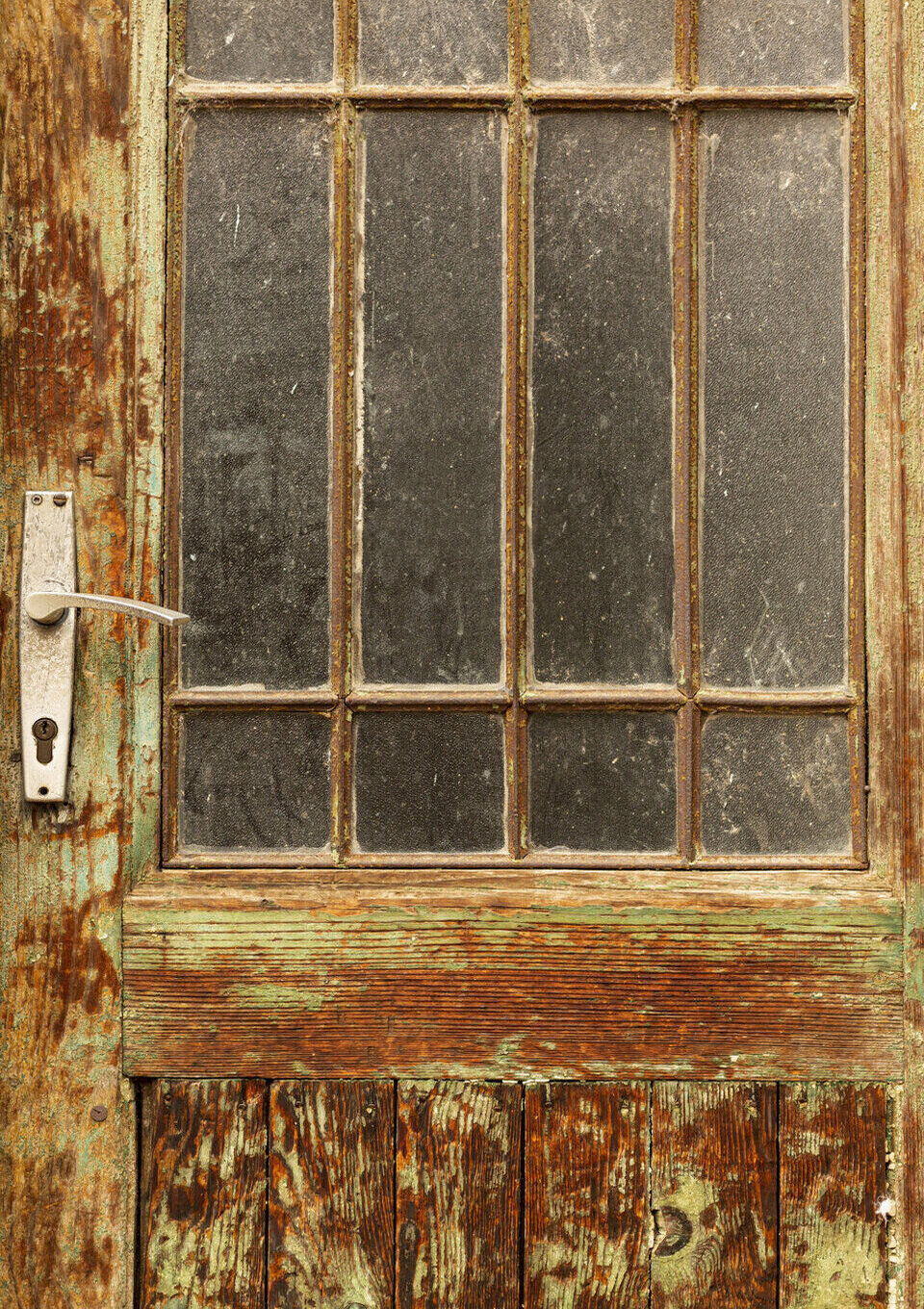
If you want to paint old interior doors in your apartment, there are some steps you can take:
1. Prepare the doors for painting: Before you start painting the doors, you need to prepare them. This involves cleaning them, sanding them, and cleaning them again. If the doors have been previously painted, it's important to clean them well so that the new coat of paint adheres better. Sanding can be done manually or mechanically, using different grits of sandpaper depending on the need. Cleaning should be done with a semi-damp cloth onto which a little thinner can be poured.
2. Prepare your workspace: You need to prepare your workspace by laying down plastic protective sheets or cloths on the floor to prevent paint spillage.
3. Paint the doors: When you're ready to start painting, apply a coat of paint to the doors. Paint one side of the door, then the other. Apply paint in thin layers and ensure it's evenly distributed. If necessary, apply another coat of paint to achieve the desired effect. Use a brush or roller that is compatible with the type of paint you've chosen.
4. Let the doors dry: After painting the doors, leave them to dry. It usually takes a few hours for the paint to dry, but this depends on the type of paint and the conditions in the room. Check the paint manufacturer's instructions for the exact drying time and how long you should wait before applying another coat.
5. Finish the job: Once the doors are completely dry, you can finish the job by polishing them and installing new handles and locks.
If you're not sure how to paint the doors or if you're inexperienced in this task, it may be helpful to consult a painting expert or watch tutorials online to help you master this task. Our team is also available to assist you.
How to get rid of mold in the bathroom?

Here are some steps you can take to get rid of mold in the bathroom:
Clean the pipes: Mold often forms due to clogged pipes, so the first step is to clean them. You can use pipe cleaning chemicals or natural ingredients such as baking soda and lemon juice.
Check the ventilation: Poor ventilation can lead to moisture accumulation in the bathroom, causing mold. Make sure the vents are open and that the bathroom fans and roof vents are in good condition.
Use the fan: Regular use of the bathroom fan will help remove moisture from the room more quickly, reducing the chances of mold growth.
Use a dehumidifier: A dehumidifier is a device that removes moisture from the air, preventing it from accumulating in the room. You can use it in the bathroom to prevent mold.
Dry the bathroom after use: It's important to dry the floors and walls in the bathroom after use to prevent moisture buildup. You can do this with a towel or cotton cloth.
If you still have mold problems in the bathroom, it may be helpful to consult a plumbing repair specialist or submit a maintenance request if you live in an apartment. They can identify the cause of the mold and suggest appropriate solutions.